
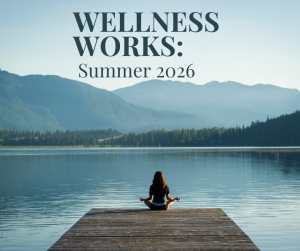
Wellness Works: Summer 2026
5 Essentials for Your Best Summer Yet
Summer is the season of opportunity—a chance to reset your habits, soak up the sun safely, and prioritize the mental downtime we often skip during the winter hustle. Use these strategies to maximize your well-being while making the most of the warmer months.
- Build a High-Energy Routine
With changing schedules and school breaks, it’s easy for structure to slip away. Instead, use the longer days to build better habits:
- Early Starts: Wake up a little earlier to enjoy the cool morning air before the heat peaks.
- Active Transit: Swap the car for a bike or a walk when running local errands.
- Seasonal Eating: Take advantage of heart-healthy vegetables and fresh, hydrating fruits.
- Master Sun Safety
Vitamin D is a mood booster, but protection is non-negotiable.
- The SPF Standard: Apply a broad-spectrum sunscreen (SPF 30 or higher) every day, even when it’s overcast. Reapply every two hours, or more frequently if you’re swimming or sweating.
- Gear Up: Use wide-brimmed hats and sunglasses to protect your eyes and face, especially during the “peak burn” hours of 10 a.m. to 4 p.m.
- Outsmart Vacation Stress
A “relaxing” trip can quickly become stressful if planned at the last minute.
- Map It Early: Whether it’s a beach trip or a local staycation, book your logistics ahead of time.
- Set Firm Boundaries: Communicate clearly with your team about your time off. Use your vacation to truly disconnect—your productivity will thank you when you return.
- Lean Into Summer “Firsts”
Summer is the ideal time to spark creativity by trying something new.
- Get Competitive: Join a local pickleball or tennis league.
- Get On the Water: Try a weekend kayaking or paddleboarding class.
- Prioritize Hydration
As temperatures climb, your body requires significantly more fuel to stay cool and keep your joints lubricated.
- The Math: Aim to drink half your body weight in ounces of water daily (e.g., if you weigh 160 lbs, aim for 80 oz).
- Eat Your Water: Hydrate with water-rich snacks like melons & cucumbers.
Pro Tip: Consistency is the key to well-being. Pick just two of these tips to focus on this week, and layer in the rest as the season progresses!
Navigating Summer Social Anxiety
If the thought of a packed summer calendar makes you want to retreat to the air conditioning, you aren’t alone. While “summertime vibes” often imply non-stop socializing, the season can be a major trigger for social anxiety.
Why Anxiety Spikes in the Summer
The transition from a structured winter to a wide-open summer can create a perfect storm for social stress:
- Social Overload: The sudden influx of barbecues, weddings, and beach trips can lead to “decision fatigue” and overstimulation.
- Routine Disruption: Without the predictability of a standard schedule, uncertainty grows, which can exacerbate feelings of unease.
- The FOMO Factor: Social media often creates a “highlight reel” of everyone else’s summer, making you feel inadequate if you aren’t constantly on the go.
Strategies for a Balanced Summer
You don’t have to accept every invitation to have a “successful” season. Try these practical management techniques:
- Set Firm Boundaries: It is okay to say no. Limit your events to a number that feels sustainable and prioritize downtime to recharge.
- Plan “Micro-Steps”: If a large party feels daunting, start with low-pressure, small gatherings. Gradually increasing your exposure helps build social confidence.
- Focus on Interests: Shift your focus from what you should do to what you want to do. Reading in a park or gardening is just as much a “summer activity” as a crowded festival.
Managing social anxiety is a marathon, not a sprint. Be patient with yourself and remember that “enjoying summer” looks different for everyone.
Pro Tip: Before heading to your next event, try five minutes of box breathing. It’s a simple, invisible way to reset your nervous system and lower your baseline stress level.