Company culture is shaped by many factors and can evolve at any time. As workplaces become increasingly tech-driven, organizations can use HR data strategically to enhance the employee experience and build a thriving environment. By relying on accurate data, HR professionals gain a clearer understanding of what employees truly value and need, making it easier to cultivate a positive, authentic workplace culture.
What Is HR Data?
HR data encompasses the metrics and organizational insights gathered and reviewed by HR professionals, covering everything from daily performance and engagement to workforce demographics, compensation, and skills. This information is pulled from a variety of systems, including attendance trackers, payroll platforms, employee records, evaluations, and surveys.
Key Examples of HR Data
HR data spans numerous facets of the employee lifecycle, including:
Recruitment and hiring: Tracking metrics like candidate sources and time to fill roles.
Employee demographics: Monitoring attributes such as age, educational background, and gender.
Performance data: Reviewing performance evaluations and key performance indicators (KPIs).
Employee engagement: Measuring satisfaction levels through surveys and direct feedback.
Absenteeism and turnover: Tracking rates for absences alongside voluntary and involuntary departures.
Compensation and benefits: Analyzing salaries, bonus structures, and benefit packages.
Employee feedback: Assessing employee complaints and tracking resolution timelines.
Learning and development: Reviewing training completion, certifications, skills assessments, and professional development programs.
Succession planning: Evaluating advancement potential, promotion readiness, and talent pipelines.
Uncovering Insights and Taking Action
Beyond formal metrics, all forms of feedback—including informal discussions, focus groups, surveys, and insights gathered during department or team meetings—serve as valuable HR data. Ultimately, gathering and analyzing these metrics helps organizations pinpoint specific areas that require intervention, ensuring leadership can make informed decisions to continuously improve the workplace.
Cancer has evolved into a persistent and complex challenge that demands a proactive approach rather than a reactive one. With more employees being diagnosed at younger ages and the cost of advanced treatments accelerating, cancer has solidified its position as a primary driver of healthcare spending for organizations. According to the Business Group on Health’s 2026 survey, 58% of employers identify cancer as their leading cost factor, while 74% report an increase in cancer prevalence within their own workforces.
The Expanding Financial Burden
The economic impact of cancer now extends far beyond traditional medical claims. While rising pharmacy costs—particularly for oncology medications—are a significant contributor to annual budget increases, employers are also absorbing substantial indirect costs. These include short- and long-term disability claims, lost productivity, “presenteeism“among employees managing their own care or supporting ill family members, and the strain of increased mental health service utilization. Furthermore, the timing of care is critical; research indicates that diagnosing cancer even one stage earlier can save approximately $60,000 per patient, underscoring the financial value of early detection.
Key Trends Reshaping the Landscape
Three primary forces are transforming how cancer impacts the workplace:
Innovations in Precision Medicine: While genomic testing, immunotherapies, and gene therapies have drastically improved survival rates, they come with high price tags—sometimes exceeding $500,000 per treatment course. The challenge for employers is managing access to these life-saving innovations without compromising quality or financial sustainability.
Rising Diagnoses in Younger Adults: An increasing number of cancer cases are occurring in individuals under 50. This shift, combined with a significant gap in preventive screenings during the COVID-19 pandemic, means more employees are presenting with advanced-stage diagnoses.
The Shift to Chronic Condition Management: Medical success has turned cancer into a manageable condition for many, meaning employees may live with cancer for years. This requires employers to rethink benefits, as they must now support survivors who require long-term follow-up care, mental health support, and accommodations for lingering treatment side effects.
Proactive Strategies for Benefit Design
To stay ahead of these trends, employers are moving beyond standard coverage to implement more strategic, holistic support systems:
Prioritize Prevention: Incentivizing early screenings is the most cost-effective way to mitigate long-term expenses.
Utilize Centers of Excellence (COE): Steering employees toward specialized, high-volume oncology centers ensures better outcomes and reduces treatment variation.
Strengthen Precision Medicine Policies: Partnering with consultants to establish evidence-based coverage for genomic testing and targeted therapies enabling employees to receive more personalized, effective care while minimizing unnecessary trial-and-error treatments.
Bridge Support Gaps: While most employer-sponsored plans offer cancer adjacent resources – such as mental health services through Employee Assistance Programs (EAPs), disability coverage, and basic care navigation – these solutions fall short of the complex, individual needs to cancer patients and survivors. Mental health support is rarely tailored to oncology-related challenges, and return-to-work programs often overlook the physical effect of treatment. More comprehensive support can include cancer-specific navigation programs, second-opinion services, and return-to-work planning.
Leverage Data for Better Decisions: Using claims and screening data helps employers identify key areas of need and focus interventions where they can make the greatest difference.
The landscape of cancer care requires a fundamental shift in mindset: employers must transition from being reactive payers to becoming proactive health partners. By combining high-quality treatment access with holistic employee support, organizations can better manage the economic burden while providing essential care during their employees’ most challenging times.
An FSA is an employer-sponsored, tax-advantaged savings account. It allows you to set aside “pre-tax” money—meaning the money is taken out of your paycheck before taxes are calculated—to pay for out-of-pocket healthcare and dependent-care expenses. The Bottom Line: Because you aren’t paying taxes on this money, you effectively lower your taxable income and increase your spending power for health needs.
Tax Savings: Pre-tax contributions save you money on every dollar.
Employer-Based: You must work for a company that offers an FSA to participate.
Use It or Lose It: Most funds must be spent within the plan year, though some plans offer small rollovers or grace periods.
How It Works
Your chosen contribution amount is divided across your yearly paychecks and deducted automatically. The Federal FSA Program estimates that those with an FSA save 30 percent on healthcare expenses on average.
What Can You Buy With an FSA?
Beyond doctor’s visits and hospital fees, you can also use your FSA funds for:
Everyday Care: Band-aids, bandages, sunscreens, and menstrual care products.
Diagnostics: Blood pressure monitors, cholesterol test kits, and thermometers.
Therapy: Acupuncture and chiropractic care.
Family Planning: Birth control and pregnancy tests.
The Pros and Cons
The Benefits
Instant Tax Break: Your federal and employment taxes are lowered immediately.
Day-to-Day Savings: Covers “hidden” costs like sunscreen, first aid kits, and over-the-counter meds.
Upfront Funding: With a Healthcare FSA, your full annual amount is usually available on Day 1 of the plan year.
The Limitations
Not Portable: If you leave your job, you generally lose the account.
Strict Deadlines: Most plans require you to spend the balance by Dec 31st (check if your plan allows a $680 rollover or a 2.5-month grace period).
No Investing: Unlike an HSA, FSA funds do not earn interest or grow in the stock market.
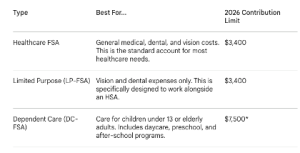
Exploring the Different Types of FSAs
Not all FSAs are the same. Depending on your needs, your employer might offer:
*Note: For the Dependent Care FSA, the limit is $3,750 if you are married and filing taxes separately.
Is an FSA Right for You?
Opening an FSA is a great way to save money on taxes and prepare for healthcare costs. As with other types of savings accounts, it allows you to contribute and stash away money, but in this case, that money is taken out of your paychecks in a set amount and is nontaxable. Check to see if your employer matches contributions as well.
Understanding the rules, benefits, and limitations of these accounts will allow you to maximize their value and ensure you’re making the most of this employee benefit.
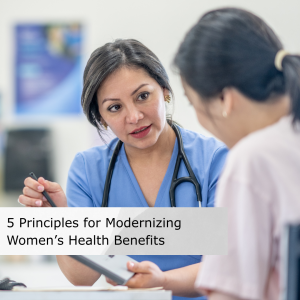
As the modern workforce evolves, employer-sponsored benefits must adapt to meet changing demographic demands. Women comprise nearly half of the U.S. workforce and are its primary consumers of healthcare services. Today, standard health coverage is shifting away from a pregnancy-only lens to an inclusive, whole-life framework.
The Evolution to Whole-Life Care
Historically, corporate maternal care focused strictly on a brief window: prenatal visits, delivery, and basic postpartum recovery. Today, organizations recognize that pregnancy is just one phase of a lifelong health journey. A comprehensive benefits framework accounts for every stage of a career:
Preconception and fertility planning.
Pregnancy, high-risk maternity care, and comprehensive postpartum support.
Menstrual health and chronic reproductive conditions (e.g., endometriosis).
Midlife career transitions, including perimenopause and menopause.
Chronic conditions that disproportionately impact women, such as autoimmune disorders and bone health issues.
4 Key Trends Transforming Corporate Benefits
Universal Fertility and Family-Building Support
With one in eight couples facing challenges conceiving or sustaining a pregnancy, family-building benefits have shifted from a perk to a baseline recruitment tool. Two-thirds of employers plan to invest heavily in family health benefits over the next three years—a 44% increase compared to 2024. These initiatives provide crucial financial assistance for complex, high-cost treatments like in vitro fertilization (IVF), egg freezing, and surrogacy.
Specialized Maternal Health Interventions
Millennials now make up the largest segment of the workforce (36%), placing them at peak childbearing age. Because maternity costs have escalated by 50% over the last decade and 57% of benefits leaders report a rise in high-risk pregnancies, timely intervention is critical.
Providing digital care navigation reduces high-risk maternal journeys by 61%, significantly lowering claims costs. Holistic organizations are also expanding care beyond delivery to include doula services, postpartum mental health screenings, and lactation support to ease the return-to-work transition.
Critical Support for Menopause and Midlife Care
Menopausal women represent nearly 30% of the domestic workforce, yet fewer than 15% of organizations offer menopause-specific benefits. Symptoms like cognitive fatigue, sleep disruptions, and hot flashes cost employers an estimated $1.8 billion annually in lost work time.
Generation X workers are actively advocating for medical support, including hormone replacement therapy (HRT), especially as primary care training in menopause remains low.
Changes to the Legal Landscape
The regulatory environment surrounding reproductive health is changing rapidly. Federal directives have introduced drug pricing reforms for fertility medications and established new pathways for employers to offer standalone fertility benefits as “excepted benefits” outside traditional group health plans. Concurrently, over 20 states now mandate private insurance coverage for fertility treatments.
On the postpartum front, the federal PUMP Act has expanded lactation rights to nine million more workers by requiring private, non-bathroom spaces for expressing milk. Additionally, a wave of updated state leave laws is expanding access to family and sick leave across all life stages.
Actionable Strategic Playbook for Employers
To support women in the workforce and optimize healthcare spending, employers can consider the following five strategies:
Design Around Life Stages: Use integrated digital health platforms to provide a continuum of care from preconception to menopause, reducing fragmented solutions and administrative burdens.
Prioritize Preventive Care: Encourage early diagnostic intervention for high-risk pregnancies, fertility challenges, and midlife transitions to avoid complex, high-cost claims later.
Embed Mental Health Across All Coverage: Ensure dedicated clinical support is available for underdiagnosed struggles, including fertility-related grief, postpartum depression, and general anxiety.
Proactively Drive Utilization: Frequently and clearly communicate benefit options so employees know how to utilize resources before a health crisis occurs.
Measure Outcomes: Look beyond basic enrollment numbers. Evaluate return-to-work rates, employee satisfaction, and claims reductions over time. Utilizing analytics can help HR teams identify specific usage gaps and target early interventions.
Making benefits easy for employees to access and understand is just as important as offering the right benefits package. By simplifying benefit information and communicating it regularly, employers can improve employee satisfaction and help ensure employees receive the healthcare support they need.
Artificial intelligence (AI) tools like ChatGPT are transforming the workplace, helping organizations improve efficiency, streamline workflows and enhance the employee experience. In HR, AI can assist with tasks such as drafting job descriptions, screening applicants, supporting onboarding and answering routine employee questions. While these tools can save time and improve productivity, they also introduce legal, ethical and privacy concerns that require careful oversight.
How AI Supports HR
AI chatbots use natural language processing to understand user questions and generate human-like responses. HR teams are increasingly using these tools to automate repetitive tasks, provide quick access to policies and benefits information, assist with recruiting and create performance review content. By handling administrative work, AI allows HR professionals to focus on more strategic initiatives.
Key Risks to Consider
Although AI offers many advantages, it should not replace human judgment in employment-related decisions. Employers should be aware of several potential risks:
Employee Privacy: Employees may share sensitive health or personal information with AI tools. Employers are responsible for protecting this data and ensuring it is handled appropriately.
Employment Law Compliance: AI systems trained on biased data can produce discriminatory outcomes in hiring, promotions or other employment decisions. Employers must ensure AI use complies with labor and employment laws.
Accommodation and Workplace Complaints: AI may fail to recognize requests for accommodations under the Americans with Disabilities Act (ADA), leave requests under the Family and Medical Leave Act (FMLA), or reports of harassment, discrimination or retaliation that require prompt human attention.
Data Security: AI platforms may collect user information or store submitted data, making strong privacy policies and safeguards essential.
Confidential Information: Employees should never enter proprietary, confidential or trade secret information into public AI tools, as the information could be retained or shared.
Accuracy and Reliability: AI responses may be incomplete, outdated or incorrect. HR professionals should review all AI-generated content before relying on it for important decisions.
Employer Takeaway
AI can be a valuable resource for HR, but it works best as a support tool, not a replacement for human expertise. Employers should establish clear policies for AI use, protect confidential information, monitor compliance with employment laws and ensure HR professionals review AI-generated content before it is used. With thoughtful oversight, organizations can benefit from AI while minimizing legal and operational risks.